

Executive Summary
The most challenging change in manufacturing since automation first emerged is the advent of artificial intelligence. As AI integrates with every manufacturing ecosystem, global interest has never been higher. However, interest in Industry 4.0 solutions presents a paradox. Despite record investment levels, a large proportion of projects never scale up, reach production, or generate positive ROI before being shut down. The disparity between small-scale experimentation on test pieces/in trials and complete change at an enterprise level remains an underlying structural challenge throughout our current lives.
This white paper compiles and synthesizes the insights provided during keynote talks and panel discussions during PES University's Symposium 2.0 on AI in manufacturing held on February 14, 2026, welcoming both academic researchers and industrial practitioners and enterprise leaders. Throughout the talks AI success stories were attributed less to algorithmic complexity and more to integration in value streams and decision flows.
This shift requires manufacturing to recognize AI not as disjoint pilots of algorithms toward automation, but as an Engineered Decision System. The Symposium 2.0 argued in favor of viewing AI not as a vehicle for automation, but as a structure designed to make decisions. The results of case studies presented at the event were encouraging.
Sansera Aerospace showed how structured real time monitoring and automatic alerting scaled up utilization of machinery to over 60% from just 45% (without acquisition of new machinery) in 18 months, with hardly any CapEx investment on machinery. Integrated Data Architectures for production planning improved on-time delivery levels from 62% to 92%, and through algorithm-driven optimization models, the SANSERA DIPF (Data Integration Process Framework) helped analyse the entire supply chain with optimization potential by introducing intelligence in place of capital expenditure to maximize productivity.
Amongst individual leaders who were recognized: NFH, who created the foundation for AI decision architectures for high-mix low-volume assembly plants, and JanAI, representing the Jan AI Mission, who fostered grassroots AI literacy by providing rural micro enterprises access to AI tools over vernacular languages, chatbots, and community kiosks. Between them, the figures exemplify the effort of the conference to move from ivory-tower, high-end research to boots-on-the-ground deployment.
Across these and other case studies — from the high volume Tirumala Laddu production system to precision agriculture applications in rural India — a consistent pattern emerged: disciplined sequencing — data standardisation, protocol harmonisation, KPI ownership mapping, financial alignment, and cross-functional governance. AI in that way is never a standalone technology. It is an engineered layer of intelligence that must be structurally embedded into operations systems to generate measurable productivity, capital efficiency, and workforce empowerment. The paper concludes with a three-horizon stacked roadmap (2026–2031) on how to go from standardisation to tactical scale-up right up to autonomous, agentic manufacturing ecosystems.
Background of Symposium 2.0
Genesis and Motivation
On February 14, 2026, PES University hosted Symposium 2.0 on AI in Manufacturing. Building on momentum from the inaugural Symposium 2.0 and recognizing that industrial AI had reached a critical inflection point, the event was born from a stark insight PES University had identified — while AI technologies were sprouting and Industry 4.0 investment was strong, industries consistently failed to turn them into scaled value.
The Symposium 2.0 brought together over 300 participants from across all the departments in PES attended, heads of manufacturing at large Indian conglomerates and technology companies and start-ups, industrialists in aerospace, automotive and electronics, as well as government representatives and representatives from business organisations.
Participants and Structure
The Symposium 2.0 brought together an impressive mix of stakeholders, fostering a rare environment for interdisciplinary dialogue between theory, practice and policy. Its diverse set of attendees included academic researchers that bring advanced methodologies from machine learning, operations research and industrial informatics; industrial practitioners from aviation, automotive, electronic products and consumer goods industries highlighting realities on the factory floors, supply chains and quality control lines; enterprise leaders from global multinationals working in technology manufacturing industries presenting an enterprise perspective of scaling AI; along with policymakers and officials from CII, NASSCOM, and industry-specific associations highlighting roles governing regulatory frameworks, incentive policies, and national manufacturing missions. This mixture of participants was not created accidentally — it was designed and created to bridge the difference between innovation in laboratories and adoption on the shop floor, and of successful POC (Proof of Concept) to enterprise-wide adoption within the enterprise.
The Production Planning and Scheduling session focused on optimizing multi-product, multi-machine environments using dynamic data under uncertainty. Speakers on Quality Intelligence and Defect Detection detailed how computer vision and pattern recognition can surpass humans in speed and accuracy. The keynote speaker also covered Tactical AI Transformation via the ACE Framework (Autonomy, Collaboration, Execution) within value stream mapping, applying AI not in isolated cases but system-wide. The session advocated for accessible AI in manufacturing to empower non-skilled labor in rural and underserved regions. Each keynote spurred active discussions comprising academics, industry experts, technology evangelists, developers and advisors on implementation challenges — from tackling legacy systems, data management rules, policies on upskilling manpower development, managing and mitigating digital inequality, maintaining vigilance against growing cybersecurity risks, to the ROI dilemma and exploring promising solutions and previous failures. The final session synthesised into a mature hierarchal model for AI adoption, priority investment areas, and policy recommendations.
The State of Industrial AI: Context and Imperative
The Investment Paradox
Over the past decade manufacturing organizations have invested heavily in digital technologies, from Industrial IoT sensors, to ERP upgrades, to MES systems, to cloud analytics and machine learning pilots. It is estimated that hundreds of billions of dollars are spent globally on Industry 4.0 initiatives annually in the past few years. Yet while digital technology implementation has increased, the outcomes have been highly varied across organizations and sectors.
A strange pattern emerging from industry experience is that artificial intelligence initiatives in manufacturing do not fail for being algorithmically unsound. They fall down instead for failures attributable to alignment of Data, Decision Rights, Discipline and Accountability. The models often work well under controlled pilots; it is getting to the stage of full roll-out, for models to be an integral part of day-to-day operations and integrated into workflow and decision-making processes, which always proves elusive. This investment-performance disconnect is what the Symposium termed the "Value Divide."
The Widening "Value Divide"
One theme across presented domains at the Symposium 2.0 was the growing "Value Divide." With an onslaught of sensors and connectivity and data volumes increasing exponentially, digital penetration is rising but the value realised is disproportionately low. 80% of AI projects are getting stuck in proofs-of-concept and pilot phases, called by practitioners "pilot purgatory" — solutions that are successful technically but cannot scale across different plants or integrate into the workflows of the factory.
The reason is rarely about lack of computational power, more about governing ambiguity — who owns the data? Who will answer and act upon its insights, and what to measure exactly to show the successes? It is also about data indiscipline: inconsistent labels, manual overrides without documentation, disintegrated information flows. And the behavioural aspects: people prefer to trust familiar processes. The Value Divide is not a technology gap — it is an organizational capability gap.
Manufacturing Mischaracterized
It has become customary to conflate manufacturing with a data deficiency problem. Far from it — modern factories are a source of millions of machine signals, transaction records, quality loggings and supply chain metadata. A single CNC machine is responsible for the generation of thousands of pieces of information during a one-second-long process of manufacturing. One automotive factory can put out petabytes of operational data every year. However, until recently, this trove of data was either logged at local servers without backup, or analysed in batches before being forgotten. There was nothing between these two extremes to form a coherent stream of information. The reason for this bottleneck, as was brought to light, is not data collection, but data translation — the problem of turning millions of streams of data fragments into a decision engine that compresses response time, brings accountability, and results in direct profit and loss improvements.
The reframing of AI as automated, as opposed to structured decision architecture, was the essential intellectual value of Symposium 2.0. Nonetheless, the meaning that the data is giving is subject to rigorous compliance with QA at the data collection stage. In cases in which the signals are not checked for whether they meet the standard, accuracy rates worsen steadily, so that any AI programme, put simply, makes a "Fatal" decision and falls apart in the process.
The Industrial Imperative
The urgency required to overcome these challenges is increased by wider industry trends. Manufacturers confront margin compression in an increasingly complex and competitive global marketplace, growing concerns about social license as experienced operators slowly retire and deplete the manufacturing workforce, and mounting pressure (whether external stakeholder or public, based on sustainability or social welfare) to develop ever more inventive ways to improve the productivity of limited physical and human capital, as a minimum.
Organisations are pressured on twin fronts by technological transformation brought about from digital modernisation and AI-enabled decision intelligence. AI offers a doorway to help navigate these pressures; organizations need to move away from pilots toward deployment of AI solutions. Consequences for inaction are significant — organizations that cannot equip themselves with a toolset to address these challenges will fail in a smart and automated, industrial landscape.
Key Themes and Identified Problems
To understand why this gap persists, the Symposium 2.0 identified five recurring structural problems that block AI scale-up.
The Pilot Purgatory Paradox
At an operational or functional stage, projects often seem to offer technical potential, boasting high accuracy figures and strong ROI estimations calculated through simulation or similar approaches. But when it comes to scaling to multiple plants, integrating into actual workflows, or offering true financial reward, they often stall. The causes are multiple and intertwined:
- Unclear ROI: Pilot projects often lack clear financial aims, causing difficulties when justifying financing for scaling the project.
- Fragmented Data Architectures: Even successful pilot projects might rely on curated experimental datasets, instead of the real messy situations found in a production environment.
- Workforce Resistance: Many older facilities in manufacturing firms are made of materials unsuitable for the connectivity and the number of data points necessary for mass deployment.
- Legacy Infrastructure Constraints: Many older manufacturing facilities have equipment and control systems (PLCs, CNCs, proprietary fieldbuses) that lack the connectivity bandwidth or data resolution required for mass deployment of AI solutions.
- Lack of Structured Frameworks: Companies often lack the protocols and governance through which to decide among and scale AI projects.
Structural Fragmentation
Historically, manufacturing systems are layered on top of each layer. The systems were added ad-hoc, layer over layer, over the years. CNC machines were sometimes running on 20–30-year-old controls, PLC devices were running on all possible communication protocols, and old bulky ERP systems were overly customised to support different departments — all working within silos, without having properly aligned data schematics that clearly defined who had decision rights.
The Data Insight Disconnect
A central topic addressed was the "data rich, insight poor" paradox. Most organizations deploy new sensors without clearly defining ownership of the resulting data streams. Additionally, downtime categories are often not standardized across production lines and shifts, leading to inconsistent reporting and analysis. Reasons for manual override are lost to posterity. As a result, the analytics models learn from a pool of noisy, imprecise data. From a statistical perspective, label inconsistency and missing metadata lead in turn to bias and reduction of model accuracy. Organisations leveraging AI amplify existing indiscipline instead of addressing it. Models trained with inconsistent data are doomed to generate inconsistent insights. Algorithms that would operate with peak performance on clean, verified datasets are doomed to underperform when facing issues prevalent in production environments. The data insight disconnect is not caused by the quantity of the data, but by lack of data quality, with the issue further exacerbated by missing data governance.
QA data fidelity gap: A major theme across all organisations was the absence of a QA process with regard to operational data. Even though strict QA/QC requirements exist for inspection of actual parts, when it comes to the data describing the production, there are no checks. Therefore, organisations should consider implementing a Data QA Framework for automated anomaly detection in sensor streams, and a reconciliation programme against IT systems run on a regular or scheduled basis, with mandatory documentation of any manual data overrides to protect against model drift.
Unclear Decision Rights
The third key systemic constraint is unclear decision rights. While AI systems generate valuable recommendations, many organizations fail to define who is responsible for acting on them, whether it is the maintenance, operations, production planning, or IT team. This lack of clear ownership creates delays even when actionable insights are readily available. As a result, recommendations to prevent equipment failures or optimize production schedules are often ignored, because no department has explicit decision authority. Consequently, many AI initiatives remain trapped in "pilot purgatory" — successful proof-of-concept projects that fail to scale or deliver enterprise-wide financial value due to weak governance and unclear accountability.
The IT/OT Security Vulnerability
A fundamental security hurdle discussed repeatedly at the AI manufacturing forum was the security threats from converged IT/OT architecture. Connecting legacy CNC machines (OT) to cloud analytics platforms (IT) requires bridging over a protocol gap — potentially creating huge attack surfaces. A vulnerability in a connected sensor network or an unpatched PLC controller might allow an attacker to cause physical consequences, such as disrupting the plant's production line, destroying equipment, and threatening workers' physical security.
Standard IT security frameworks that aim to ensure data confidentiality are proving to be inadequate for securing OT, where availability and physical integrity are vital priorities. It was emphasised at the forum that a unified security architecture that embraces IDS, network segmentation and real-time threat monitoring for both IT and OT systems is vital for sustainable AI transformation. Otherwise, the digital nervous system powering the plant floor's AI would be a single catastrophic point of the plant's failure.
The Skills and Capability Gap
The final theme that came out across all the fields was around the persistent skills gap. All manufacturing organisations found it a challenge to find people with the combined expertise of domain knowledge of operations and the technical skill set of data science, etc. This is even more problematic in rural manufacturing, where workers generally have strong domain knowledge, but lack the AI skills needed to interface with modern MES (Manufacturing Executive System) platforms. The resulting skills gap leads to cultural resistance to AI recommendations, insufficient internal capacity to maintain the models, and over-reliance on external consultants to support continuous running. Following the initial implementation phase, organisations are unable to maintain AI initiatives; systems that initially provided good insights are allowed to decay.
Domain Insights: Case Studies from the Symposium 2.0
Production Monitoring — The Sansera Aerospace Case Study
The Operational Challenge
Sansera Aerospace, a Tier 1 supplier to the aerospace industry, had almost zero visibility on their shop floor. Prior to implementation, 45 percent machine utilization was driven by lack of visibility to track real-time downtimes. They were still using siloed systems for the same, with manual entries into Excel spreadsheets being done by every operator, multiple times on every shift. With most of the records residing only on paper to be later transferred to spreadsheets, reports took about one week to show some data — thus giving almost zero time to act. It reflected all elements of an Industry 3.0 type of solution, with breakdown maintenance being the biggest feature of it, since there would just not be enough time to analyse the root cause.
CNC machines with Fanuc controllers made up 70 percent of the shop floor. Different generations of machines at production facilities had different kinds of connectivity and different protocols for sending and receiving data. This was complicated, requiring a unified solution that could onboard machinery rapidly to gather data for analysis.
With this newfound visibility, they were able to carry out more than just an increase in utilization — it allowed them to develop a Quality Assurance (QA) workflow around the data that, up until this point, was only in their minds. By collecting the spindle and vibration load data together with output quality results from their QC equipment further downstream, they discovered machine process parameters that directly correlate to production non-conformance. This effectively changed their method of QA analysis, switching the entire QA team from merely identifying process parameters post-incident, to live and predictive parameter observation.
The Solution Architecture
The transformation followed a meticulously orchestrated two-phase approach, blending rapid connectivity with advanced analytics.
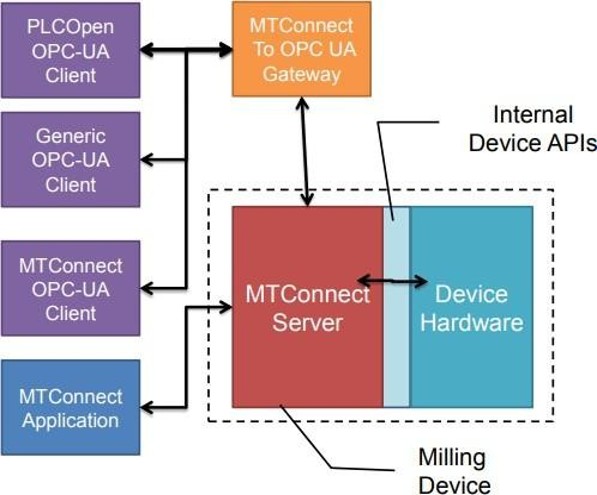
Phase 1: Rapid Connectivity via Fanuc MT LINKi. With an intention for speed-to-value implementation, the first phase focused on solving Sansera's "connectivity chasm" of its heterogeneous fleet. In its CNC shop, machines with Fanuc control were prevalent, so Fanuc's MT LINKi, which is built on the MTConnect standard, provided a quick route for ingesting real-time machine data. MT LINKi gateways, which harvest machine signals like spindle load, axis positions, alarm conditions and program execution states at second-level resolution, were deployed across 90+ CNC machines for a real-time view of operations through dashboards. The data streams were further linked via the OPC UA protocol to a unified machine communication layer, allowing interoperability irrespective of control type, as it provided a standardized namespace for production data. Within eight weeks the entire fleet of machines was connected to the system. Dashboards revealed patterns never noticed before by the plant operatives. Large idle periods due to tool changes, as well as small stoppages, went completely uncaptured in manual logs.
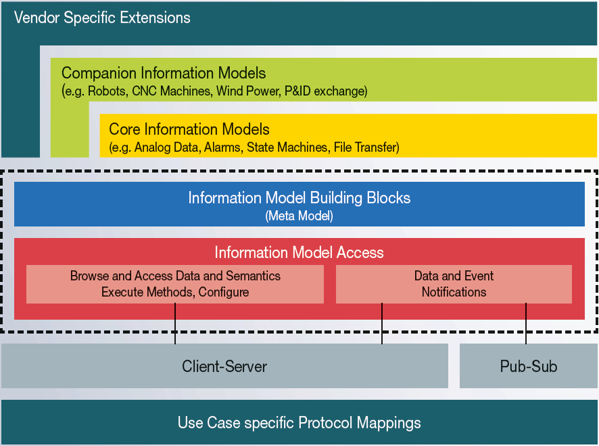
With an intention for a speed-to-value implementation, the first phase focused on solving Sansera's "connectivity chasm" of its heterogeneous fleet. In its CNC shop, machines of Fanuc control were prevalent, so Fanuc's MT LINKi, which is built on MTConnect standard, provided a quick route for ingesting real time machine data. MT LINKi gateways, which harvest machine signals like spindle load, axis positions, alarm conditions and program executionstates at a second resolution (refer to Figure 1), were deployed across 90+ CNC machines for a real time view of operations through dashboards. The data streams were further linked via the OPC UA protocol to a unified machine communication layer (refer to Figure 2), allowing interoperability irrespective of control type as it provided a standardized namespace for production data. Within eight weeks the entire machines were connected to the system. Dashboards revealed patterns never noticed before by the plant operatives. Large idle periods due to tool changes as well as small stoppages went completely uncaptured in manual logs.
Phase 2: Advanced Analytics with Leanworx MES. In the second phase, the Leanworx Manufacturing Execution System was provided as an analytical layer over machine data, analyzing machine data streams through rules-based classification as well as machine learning. While the first phase dealt mainly with real-time monitoring of production, the MES allowed data to be analyzed more thoroughly. Downtime events were automatically categorized based on historical alarm patterns and operator inputs, allowing more precise identification of recurring causes of stoppages. Automated alerting mechanisms were introduced to ensure significant machine events triggered immediate notifications to appropriate personnel. Edge computing scripts deployed at the machine level enabled automatic responses to specific conditions.
Outcomes and Insights
By the end of Phase 2 (Leanworx MES integration), the production monitoring system was generating approximately 1.2 million machine data points per day from the connected CNC fleet. More critically, the integrated monitoring architecture transformed the interpretation and utilization of production data.
Machine utilization increased from 45% to approximately 60%, with some bottleneck production lines occasionally reaching utilization levels of nearly 68%. These improvements were achieved without the acquisition of additional manufacturing equipment; performance gains stemmed primarily from enhanced visibility and more rapid response times.
The Sansera Engineering automation project reduced manufacturing defects and increased output. Production decisions by the workers and supervisors of the company started to be taken in real-time, which led production to be enhanced day-to-day, producing maximum output with a quality control system in place. Sansera is an example that demonstrates that Artificial Intelligence's biggest impact has been compressed decision latency — i.e., the time required between the incidence of a problem and the appropriate response and reaction from the right people at the right time. Through this compression, organizations can tap into significant operational capacity within existing manufacturing systems.
Production Planning — The SANSERA DIPF Framework
The Planning Challenge
In aerospace manufacturing, production planning is a complex coordination challenge with volatile demand, unexpected supply chain difficulties, and stringent capacity restrictions. At Sansera Aerospace, planning before the DIPF was conducted based on static Excel spreadsheets manually exported from SAP, resulting in significant backlogs, with orders as high as 40% being delivered late and a suboptimal load balance across over 200 SKUs. A siloed design ignored real-time dynamics, resulting in excessive inventory stock of up to 15% despite order backlogs and idle machines. Moreover, the planner took over 8 hours every month to create the planning schedule, with schedules being outdated by the time they were executed.
The DIPF Architecture
The Symposium's flagship innovation, the Sansera Data Integration Process Framework (DIPF), revolutionized this domain. Built on Python for orchestration and MySQL as its RDBMS backbone, DIPF delivers dynamic, ML-infused scheduling through three core layers.
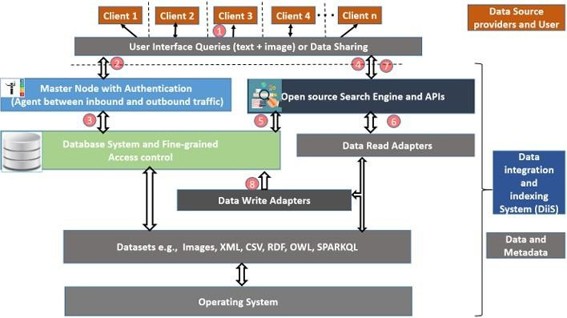
Data Integration & ETL Pipeline: An automated pipeline is established to ingest, cleanse, and transform data from multiple ERP, customer schedule feeds, inventory databases, and machine monitoring, and to provide the planning engine with the data it needs. An Apache Airflow-based pipeline is set up to continuously poll data from ERP systems, customer schedule feeds, inventories, and machine monitoring platforms.
Master Data Repository: The datasets are housed as a relational database. Standardized, normalised database schemas of key planning entities like part master data, customer demand schedule, machine capability data, and inventory are maintained using a MySQL database.
Optimization & Scheduling Engine: The system has scheduling algorithms combining an evolutionary method — genetic algorithms (using the Python-based library DEAP for implementing Genetic Algorithms) — and linear programming (using a mathematical modeling library called PuLP in Python) that test alternatives and find the best configuration meeting constraints, based on genetic algorithms integrated with a linear optimization model.
Integration of Multi-Source Planning Data: One of the defining features of DIPF is the incorporation of 5 key synchronized data streams for planning:
- Customer Schedules from Electronic Data Interchange feeds to read delivery deadlines, order quantities, delivery week numbers, and priorities.
- Part Masters data from ERP, like lead times, cycle time, BOM data, and materials for each assembly.
- SAP Stock to provide real-time material stock data (and material availability, etc.).
- Dispatch Files data from the shop floor, providing status on backlog, completion, etc.
The automated pipeline ingests, cleanses and transforms data from multiple enterprise and shop floor systems. Implemented using Apache Airflow, this pipeline continuously retrieves data from ERP systems, customer schedule feeds, inventory databases, and machine monitoring platforms.
Outcomes and Insights
The implementation of DIPF fundamentally transformed the organization's production planning process. Planning cycles that previously required eight hours were reduced to 45 minutes. Instead of generating static weekly plans, the system enabled rolling production schedules that could be updated daily.
Within 12 months, on-time delivery performance increased from 62 percent to 92 percent. Inventory turns improved from 4.2 to 7.1. The framework also incorporated explainable AI mechanisms (SHAP values) that provided transparency into scheduling decisions, enabling planners to understand why certain jobs were prioritized or delayed.
The Sansera DIPF case demonstrates how integrated data architectures and algorithm-driven scheduling frameworks can transform production planning from a static, manual process into a dynamic decision support capability. By combining data integration platforms, relational database architectures, and machine learning techniques, organizations can create scalable and interpretable planning systems.
Multi-Echelon Supply Chain & Inventory Optimization
The Inventory Paradox
The "Inventory Paradox" represents one of the most significant financial leakages in modern manufacturing networks. It is defined by a systemic contradiction: centralized warehouses report record-high stock levels (excess inventory), while localized assembly lines frequently halt due to critical shortages of low-cost components (stock-outs).
This phenomenon is not a failure of logistics but a failure of demand signal resolution. Traditional supply chain models aggregate demand globally, smoothing volatility on executive dashboards while leaving it physically disruptive at the depot level. The consequences are substantial: frozen working capital, production stoppages, and costly logistical firefighting.
The TVS Case Study
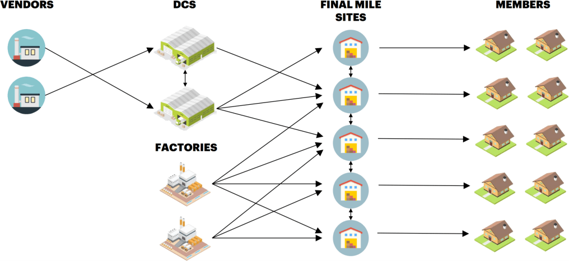
A TVS Group initiative revealed astonishing inefficiencies. The focus was on an inventory system that comprised a central warehouse supplying Area Material Depots to help production and assembly. Safety stocks were being determined purely as functions of a combined global estimation of demand, diverging from real movement patterns. Shipment lead times from the central warehouse varied by location, leading to instances where available parts would accumulate in areas with lower demand, causing shortages in AMDs, which in turn could either not start production or faced higher delays until receiving required stocks. In short, ₹215.6 crore in efficiency was at risk, while a hefty share of close to ₹209.9 crore of this loss was due to slow-moving capital stock likely to get locked in specific undesired locations.
The LSL Correction Model
LSL (Location Specific Lead Time) Correction uses more of a probabilistic method that looks at risk balancing rather than earlier static-buffer management approaches. Rather than similar or exact values of inventory levels, the solution models demand for each and every SKU, taking into account factors like consumption patterns and demand variability, with lead time accounted for using data on actual transit times from the central warehouse to each and every depot. The model simulates results approximately 1,000 times (via the Monte Carlo method or similar tools/tests) to show the likelihood of stock-outs given fluctuating demand and supply figures, and recalculates the amount of stock required so that buffers reflect location-based, varying risk profiles.
Outcomes and Insights
Application of the LSL resulted in remarkable benefits. More than 17,000 idle stock items were identified and redeployed. About 23,500 surplus stock items, resulting from over-ordering, were liquidated or redirected. The new model resulted in annual savings of approximately ₹5.6 crore, as improved allocation resulted in a reduction in carrying cost. Above all, the intervention had no impact whatsoever on the current production setup — no new warehouses, trucks, or personnel. This was achievable only by replacing current analytical models with better ones and effectively using data already present.
High Throughput Production Systems — The Tirumala Laddu Case
The Operational Context
In Tirumala, the top 3 (key) inefficiencies were: 1) a mismatch, with production not matching consumption, resulting in extra stock that would later become wastage — not just money, but affecting freshness and causing higher complaints during the distribution period; 2) lags when counters ran short on stock without prior notification, and lead time when replenishment could cause further lags; and 3) dependencies from system interruptions — for example, even with the system set up in the digital domain, a glitch in the servers could disrupt the whole model, e.g. if the demand at the ticket counters was not completely recorded by way of the digital transaction, which in turn affects estimation to determine when and how much stock the laddu would have to be ready at every stand, resulting in further delays to pilgrims, which would result in a poor customer experience.
The Technical Architecture
Applying the ACE Framework, the transformation integrated multiple data streams into a unified decision support architecture:
- API Interface to Ticket App: Real-time ticketing data provided immediate demand signals.
- Computer Vision (CNN) Counting: Deep learning models at kitchen exits and counter entry points replaced manual counting.
- ML Demand Prediction: Models analyzing historical and real-time data to predict demand.
- POS Integration: Point-of-sale systems reconciled produced units against sold units instantly.
Outcomes and Insights
Four key outcomes emerged: (1) Real-time digital counters for footfall and tickets enabled demand-driven production, eliminating overproduction. (2) Improved demand forecasts reduced wastage while ensuring sufficient quantity, reducing lag and mismatch. (3) Digitalization eliminated dependency delays, improving workflow, reducing costs, and enhancing pilgrim satisfaction. (4) Supervisors managed stock levels through exception-based real-time alerts, freeing workers to focus on complex challenges rather than manual stock checks.
Rural Empowerment and Human-Centric AI
The Skill Access Gap
The Value Divide and the Digital Divide were the theme. Whilst over 87% of the population may carry the digital tool kit needed, few of them will convert it into enterprise value. Symposium 2.0 highlighted a critical distinction between the Digital Divide and the Value Divide. While 87 percent of the population now has access to digital tools, only a fraction can convert that access into enterprise value. This shortfall is greatest in rural India, with a projected workforce shortage of 2.1 million in manufacturing, accompanied by rural people who have the physical skills required but do not possess the digital "AI vocabulary" to interact with the latest systems.
The Philosophy: Augmentation, Not Replacement
The philosophy for this domain was encapsulated in a guiding principle: "AI can analyze, but human instinct decides." AI should not replace the rural worker or farmer, but act as an "augmented intelligence" that simplifies complex data so human experience honed over generations can make the final informed decision.
Tools as Capability Multipliers
This was a significant domain, with the Smart Living cases being an eye-opener for the use of common, off-the-shelf AI tools where productivity is given a significant boost. Symposium 2.0 presented Smart Living cases where off-the-shelf AI tools transform daily productivity:
- Language as a Bridge: Use of Google Lens helps rural entrepreneurs convert technical manuals, as well as information about demand and supply, from English to vernacular languages seamlessly, obviating the requirement to study computer science as a subject (which most cannot afford).
- Safety Productivity Link: The use of automated safe-home and child trackers takes significant mental stress away from rural women, who can thus contribute gainfully higher time to their livelihood and personal productivity.
AI Driven Precision Farming
A powerful example in this case is the use of AI in pest control in the field of Agritech. Farmers used to use calendar-based spraying (using pesticides within set cycles of time), wasting chemicals and money to increase crop yield. With computer vision/AI at the edge, farmers are able to scan their crops, which then detect early levels of insecticide. The AI identifies a suitable pesticide and predicts the time when infestation should be prevented. When a farmer sees the AI correctly identify a microscopic pest before it ruins the crop, the Value Divide is bridged instantly — the AI provides visual confirmation aligning with the farmer's instinct to protect the yield.
Technical Enablers
To enable this domain, the Symposium 2.0 proposed a technical shift toward:
- Multimodal LLMs: Moving from text-heavy interfaces to voice and image based interaction.
- Edge Enabled Training: Providing "visual apprenticeships" through AR/VR, where workers learn operations through "follow the light" visual guides.
The ACE Framework: A Structured Approach to Tactical AI
Origins and Purpose
The Origins and Purpose from Symposium 2.0: the ACE framework was made to address the problem that 8 out of 10 AI projects today fail, mainly because they start with the "AI Tech" component without considering the "Value Stream" first. The ACE framework provides an analytical tool that forces five steps to integrate AI into projects without breaking them along the way.
The Five Dimensions
Dimension 1: Value Stream Mapping. Understand the value of material flow before deciding on where the technology can be used.
Dimension 2: Process Maturity. Ensure the stability of the physical process before digitising, because broken processes cannot be digitalized. Stability should be measured using CpK, which must exceed 1.33.
Dimension 3: Data Maturity. The information for machine learning needs to be real, consistent and fresh, on which basis machine learning models can be built. This means you have to consider how complete, accurate, consistent, and timely the available data is.
Dimension 4: Innovation Strategy Alignment. Whether AI is used for throughput increase, to reduce pilferage, or to increase quality, it always must be based on a company's tactical goal.
Dimension 5: AI Tech Mapping. Choosing the correct technology. You have to consider whether an ML, Computer Vision, or Generative AI approach is needed, as the technology needs to be the right one depending on the requirements the shop floor gives, rather than the trendiness of the approach.
Application and Impact
The ACE model can provide organizations with a systematic procedure that helps in evaluating and prioritizing decisions related to AI interventions by applying each step in sequence. Through multiple cases, the ACE framework was practised and tested based on the Tirumala Laddu transformation, where step after step had to be fulfilled.
Recommendations and Strategic Solutions
Based on insights from PES University's Symposium 2.0 on "AI in Manufacturing," we propose five strategic pillars to bridge the value divide and operationalize industrial AI at scale.
Protocol Harmonization
Mandate the adoption of open standards like OPC UA and MTConnect to dismantle data silos and create a unified digital nervous system across the shop floor. This enables seamless data flow from machine endpoints to enterprise systems, establishing the prerequisite for subsequent AI layers.
Decision Rights Mapping
Explicitly link AI-generated insights to specific KPI owners (e.g., maintenance, production, planning). An insight without an owner is merely noise. By mapping AI outputs to accountable individuals, organizations ensure that predictive insights result in measurable P&L improvements.
Data Governance as a Strategic Asset
Treat the "boring work" of standardizing downtime taxonomies, cleaning master data, and labeling signals as a critical investment in the fidelity of a high-value Digital Twin. A high-fidelity Digital Twin compresses decision latency, exposes hidden bottlenecks, and ultimately enables autonomous orchestration.
Structured Value Stream Analysis
Before any AI initiative, conduct comprehensive value stream mapping to identify specific bottlenecks and waste points. AI should only be applied where it can directly impact these constraints.
Process Maturity Gates
Establish clear criteria for process stability before digitization. Organizations should achieve baseline process capability (e.g., CpK ≥ 1.33) before introducing AI-driven optimization.
Data Maturity Thresholds
Define data quality standards (e.g., 92 percent completeness and accuracy) that must be met before model development begins.
Agile Implementation Protocols
Use scaled agile delivery models and MVP protocols to prove ROI in less than 90 days, ensuring that initiatives demonstrate value before significant investment.
Bridging the Skills Gap
Move beyond traditional training to deploy multimodal interfaces (voice, image) and visual apprenticeships (AR/VR) that align with the existing skills and instincts of the workforce. This is particularly critical in rural settings where workers possess deep domain expertise but may lack formal digital education.
Institutionalize Industry Academia Synergy
Deepen collaboration between universities and industry to create "Domain Data Science Hybrid" curricula. Students should master both PyTorch implementations and CNC G-code semantics, ensuring they are industry ready upon graduation.
Zero CAPEX Models for SMEs
Small and medium enterprises face disproportionate barriers to AI adoption. Transition to zero CAPEX models utilizing mathematical rigor (e.g., LSL Correction) over hardware investment, and deploy edge computing solutions utilizing Raspberry Pi federated learning clusters.
Unified Security Architecture
Embed intrusion detection systems, network micro-segmentation, and real-time threat monitoring within protocol standardization initiatives. Security must be designed into the system, not added as an afterthought.
Zero Trust Architectures
Prioritize zero trust architectures that separate IT analytics platforms from OT control systems while maintaining data flow for AI intelligence layers. This ensures that even if one layer is compromised, the other remains protected.
Predictive Cyber Defense
Deploy AI-driven predictive cyber defense capabilities that autonomously flag low-level threats and reduce detection times. By 2029, 75 percent of large manufacturers are expected to deploy such capabilities.
Data QA Protocols
Treat data as a product with defined quality gates (completeness, accuracy, timeliness) before it enters any AI pipeline.
Model QA Testing
Implement rigorous testing regimes for AI models that go beyond accuracy to include robustness against edge cases, stability under noisy data conditions, and bias detection.
Closed-Loop Quality Systems
Integrate AI-driven insights directly into quality management systems (QMS) to enable automated root cause analysis and corrective action (CAPA) workflows.
Future Roadmap for Manufacturing Industries (2026–2031)
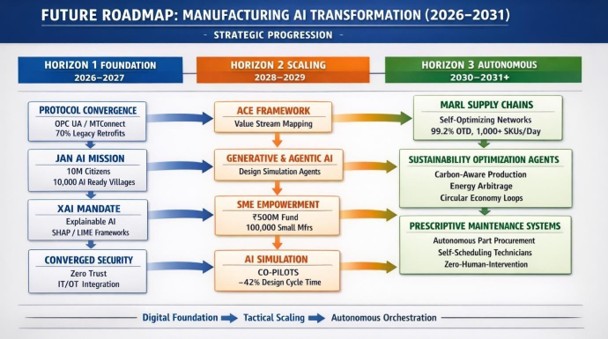
Horizon 1: Foundation and Standardization (2026–2027). Horizon 2: Scaling and Tactical Transformation (2028–2029). Horizon 3: Autonomous Ecosystems (2030–2031+).
AIM: an autonomous, self-optimizing and sustainable manufacturing ecosystem.
Key Initiatives:
- Extending Hyper-Personalization at Scale. Hyper-personalization will allow high-mix and low-volume production without facing penalties of economies of scale. Self-optimizing supply chains driven by multi-agent reinforcement learning (MARL) allow cells in a facility to be continuously reconfigured to respond to changing requirements of OEMs, with personalized batches of up to 1,000+ SKUs/day with 99.2% on-time delivery.
- Deploy Sustainability Optimization Agents. AI-driven agents in sync with real-time carbon intensity signals from national grids. These agents improve, around the clock, energy arbitrage (shifting electric load towards green), process efficiency (dynamic machining according to parameters from sensor networks), and even the circular economy (addition of a recovery loop while the manufacturing facility is on the go).
- Prescriptive Maintenance Systems. Taking autonomous maintenance from the concept of predictive towards prescriptive. This will require the implementation of an Agentic AI system that, on failure, sends a request order for required items like 3D-printing filament, schedules technicians along the whole supply chain, and then assigns slots accordingly, without the necessity for human action at this step.
- Fractal Support Ecosystems. Micro-entrepreneurs would be using their drones for rapid inventory audits, using satellite links to improve last-mile connectivity from harvest to factory, or vernacular (AI-enabled) support to enable access to troubleshooting for complex factory systems — spreading urban intelligence to hundreds of thousands of villages in India.
A related version of the roadmap presented at the Symposium sets out the same three horizons with a slightly different timeline and set of initiatives per horizon:
Horizon 1: Build the Foundation
- Protocol harmonization
- AI literacy and talent development
- Data governance and quality
- Explainable AI frameworks
Horizon 2: Scale Tactical Applications
- Enterprise-wide AI deployment
- SME enablement and support
- Generative AI for operations
- Cross-functional integration
Horizon 3: Realize Autonomous Ecosystem
- Self-optimizing supply chains
- Sustainability and circular agents
- Prescriptive maintenance at scale
- Autonomous decision ecosystems
Cross Cutting Challenges and Implementation Barriers
Data Quality
Industrial environments generate noisy data due to vibration, thermal fluctuations, and electromagnetic interference, leading to poor AI performance without robust data governance. Noisy OT signals and labor-intensive data labeling affect nearly 88% of AI adopters.
Pilot Stage Failure
Nearly 80% of AI projects fail to move beyond pilot stages due to poor integration with business decision-making. Limited explainability and weak business alignment result in 42% of projects being abandoned before completion, almost twice the failure rate of traditional IT projects.
SME Adoption Barriers
Small and medium enterprises face significant barriers to AI adoption, with 43 percent citing high capital costs as the primary challenge. Legacy systems (65 percent) and fragmented data (47 percent) further hinder implementation. In rural manufacturing, limited AI literacy despite strong domain expertise leads to resistance to AI-driven recommendations and insufficient capability to maintain AI models.
IT/OT Security
Converged IT/OT architectures expand manufacturing attack surfaces. Sophisticated threats include data model poisoning, where adversaries corrupt training datasets to produce unreliable predictions. Legacy PLC controllers and CNC machines connected via OPC UA/MT LINKi protocol bridges introduce novel exploit vectors absent in air-gapped Industry 3.0 environments.
Value Drain
Value drain through pilferage, unmanned stations, and production leakage remains significant across manufacturing operations. Traditional monitoring systems lack the real-time visibility to detect and prevent such losses.
Regulatory Pressure
Emerging regulatory mandates for emissions reporting and carbon border taxes add complexity to manufacturing operations. Organizations face increasing pressure to measure and optimize carbon-per-part metrics.
The Collaboration Framework: AI As A Team Sport
Universities like PES University must pioneer Domain Data Science Hybrid curricula, where ML students master both PyTorch implementations and CNC G-code semantics. This is not a theoretical aspiration but an ongoing reality at PES, where deep industry integration has been operationalized through multiple structured programs.
Multiple PES students are engaged in full-time projects at Sansera, working directly on production monitoring and planning problem statements. These projects bridge classroom theory with shop floor reality, enabling students to contribute to production-grade AI deployments while still in academia.
PES faculties are training TVS data teams, contributing to inventory optimization models and supply chain analytics. This collaboration ensures academic research directly addresses the "Industry Grand Challenges" of multi-echelon optimization and explainable AI.
The social tech enterprise partnership provides students with opportunities to apply AI for social impact, working on vernacular AI interfaces and lightweight ML models deployable on edge devices in resource-constrained environments.
Structured internship programs enable PES students to contribute to HCL's Automation and GenAI practices, gaining exposure to enterprise-scale AI deployments and industry standards development.
Across these partnerships, students have tackled multiple real-world problem statements defined directly by industry experts. These range from optimizing spindle utilization on Fanuc CNC machines to building explainability layers for inventory optimization models and developing computer vision pipelines for quality inspection.
Each problem statement mirrors the complexity, ambiguity, and performance constraints of production environments, ensuring that by the time students graduate, they are industry ready and capable of contributing from day one.
These engagements are full-time project integrations where students own deliverables, debug production code, and contribute to intellectual property.
Future Research Directions
The Symposium identified the following forward-looking research vectors that represent the cutting edge of Industrial AI:
Explainable AI in Industrial Decision Systems
As AI systems take on increasingly critical decision-making roles, the need for transparency and interpretability becomes paramount. Research is needed on XAI frameworks that can provide causal explanations for model outputs while maintaining computational efficiency suitable for real-time industrial applications.
Sustainability Aware AI Optimization
The convergence of AI and circular economy mandates creates new optimization challenges. Research is needed on AI systems that can simultaneously optimize for operational efficiency, energy consumption, carbon emissions, and material circularity.
AI Maturity Measurement Indices
Organizations need robust frameworks for assessing their AI readiness and maturity. Research is needed on comprehensive indices that evaluate not only technical capabilities but also organizational, governance, and cultural dimensions of AI transformation.
Hybrid Digital Twin ML Frameworks
The integration of digital twin simulations with machine learning models opens new possibilities for predictive and prescriptive analytics. Research is needed on hybrid frameworks that combine physics-based models with data-driven learning to achieve greater accuracy and generalizability.
Industrial Multi Agent Coordination Theory
As manufacturing systems become increasingly autonomous, the coordination of multiple AI agents becomes a critical challenge. Research is needed on multi-agent coordination mechanisms that can optimize across distributed decision-making entities.
Responsible AI Governance in Cyber Physical Systems
The deployment of AI in safety-critical manufacturing environments raises fundamental questions about responsibility, accountability, and control. Research is needed on governance frameworks that ensure responsible AI deployment while maintaining operational flexibility.
Design Simulation Agents
Design simulation agents that continuously validate design changes against production constraints represent a frontier for accelerating R&D cycles. By 2028, a majority of manufacturers are projected to adopt AI-assisted design validation.
Prescriptive Maintenance Paradigms
Maintenance systems will evolve from predictive to prescriptive paradigms. Instead of merely forecasting failure probability, agentic AI systems will autonomously trigger part procurement, schedule technicians, and coordinate maintenance windows.
AI for Quality Assurance in Zero-Defect Manufacturing
Research is needed on the convergence of computer vision, multi-sensor fusion, and predictive process control to achieve zero-defect manufacturing. This includes developing models that can not only detect defects in real-time but also predict the probability of a defect occurring before production begins, enabling proactive process adjustments. Federated learning architectures for QA across multi-vendor supply chains represent a particularly high-impact research vector.
Conclusion
The synthesis of Symposium 2.0 leads to a singular, inescapable conclusion: the era of "AI as an experiment" has concluded. For the manufacturing sector to survive the twin pressures of margin compression and workforce depletion, Artificial Intelligence must be elevated from a localized technical "feature" to a disciplined Engineered Decision System. The path forward is defined by three strategic pillars that bridge the "Value Divide."
From Algorithmic Sophistication to Decision Engineering
The objective of modern industrial AI is not to build the most complex model, but to achieve the compression of decision latency. Whether it is the 45-minute production adjustment loop in the Tirumala Laddu case or the real-time notification of a machine alarm at Sansera, value is created only when information is converted into action.
Structured Execution
Success lies in the boring but foundational work — protocol harmonization, standardizing downtime taxonomies, and establishing data governance.
Accountability
AI must be embedded into the fabric of "Decision Rights." By mapping AI outputs to specific KPI owners, organizations ensure that predictive insights result in measurable P&L improvements.
The Financial Imperative: Capital Efficiency as the North Star
Symposium 2.0 demonstrated that the most potent use of AI is often "Zero Capital" optimization. The Inventory Paradox, where ₹209.9 crores in working capital can be freed through the mathematical rigor of LSL Correction, proves that intelligence is a more effective lever for growth than physical expansion.
The ROI Engine
By replacing static buffers with probabilistic risk balancing (UCL/LCL), manufacturers can fund their future growth using the capital currently "frozen" in their own supply chains.
The Human Centric Revolution: Inclusive Resilience
The final, and perhaps most critical, takeaway is the transformation of the workforce. By bridging the skill access gap through localized, multimodal AI (such as Google Lens for technical translation or AR for visual apprenticeships), we move toward a future of Inclusive Growth.
We must hold firm to the principle that "AI can analyze, but human instinct decides." Technology should simplify the complex, allowing the farmer to time his pesticide with "proof in front of his eyes," or the rural worker to master a CNC machine without years of formal schooling.
The Path Forward
The next decade will not reward the "innovative" who merely experiment with pilots; it will reward the disciplined who engineer AI into their core operational fabric. Organizations must move away from isolated successes and toward integrated systems where demand signals drive production, where inventory is hyper-local, and where every machine signal has a purpose.
Acknowledgement
The authors acknowledge Niveditha N. Reddy, Research Scholar, PES University, for her exceptional dedication in compiling, researching, and drafting this white paper, whose contributions were pivotal to its successful completion. The authors also extend their heartfelt gratitude to all individuals and teams whose vision, leadership, dedication, and collaborative efforts made Symposium 2.0 a resounding success.
Special appreciation is extended to the speakers, panelists, industry experts, academic contributors, organizers, volunteers, technical support teams, and participants whose valuable insights, engaging discussions, and unwavering commitment enriched the symposium and provided the foundation for the ideas and perspectives presented in this white paper.
References
- Symposium 2.0 on AI in Manufacturing. PES University, Bengaluru, India, Feb. 14, 2026. Keynote presentations and panel discussions.
- Project Management Institute (PMI), Leading & Managing AI Projects Digital Guide. PMI Standards, 2025.
- McKinsey & Company, "The state of AI: Global survey 2025," 2025.
- MIT Sloan School of Management, "The GenAI Divide: State of AI in Business 2025," MIT NANDA Initiative Report, Aug. 2025.
- Rootstock Software, "2026 State of Manufacturing Technology Survey," Researchscape Int. Survey, Jan. 2026.
- Deloitte, "Enterprise AI Navigator Report," Press Release, Feb. 25, 2026.
- FANUC America Corp., "MT LINKi Technical Documentation," Product Brochure, 2024.
- Siemens AG, "OPC UA for Industry 4.0," Industrial Communication, 2025.
- FANUC America Corp., "MT LINKi: The Easy Way to Monitor Your Production," CNC Brochure, 2024.
- Siemens Digital Industries Software, "Sansera Engineering: Optimizes Production Efficiency," Case Study, 2023.
- OPC Foundation, "OPC UA in the Reference Architecture Model (RAMI 4.0)," OPC Connect, Jun. 1, 2015.
- M. Vahabi et al., "Federated learning at the edge in Industrial Internet of Things: A survey," Internet of Things, vol. 30, 2025, Art. no. 101123.
- MTConnect Institute, "MTConnect: Manufacturing Technical Standard," Official Standard Documentation.
- OPC Foundation, "OPC UA in the Reference Architecture Model (RAMI 4.0)," OPC Connect Blog, Jun. 1, 2015.
- M. Vahabi et al., "Federated Learning at the Edge in Industrial Internet of Things: A Survey," Internet of Things, vol. 30, 2025, Art. no. 101123.
- news.pes.edu/12004
- mckinsey.com — The state of AI: How organizations are rewiring to capture value
Read more from the Department
Explore other white papers and ongoing research from the Department of Computer Science & Engineering.